Am I allowed to abuse the Karen colloquialism for this Kia Carens review? Because it’s the exact opposite of rude, crass or annoying…
For anyone needing clarity, a “Karen” is the modern nickname for middle-aged Caucasian ladies with a rude, entitled disposition. Their collective term, Karens, was coined almost two decades after Kia had introduced the first generation of their sensible people mover. For the record, this fourth generation debuted in 2022 and is closely related to the Kia Seltos.
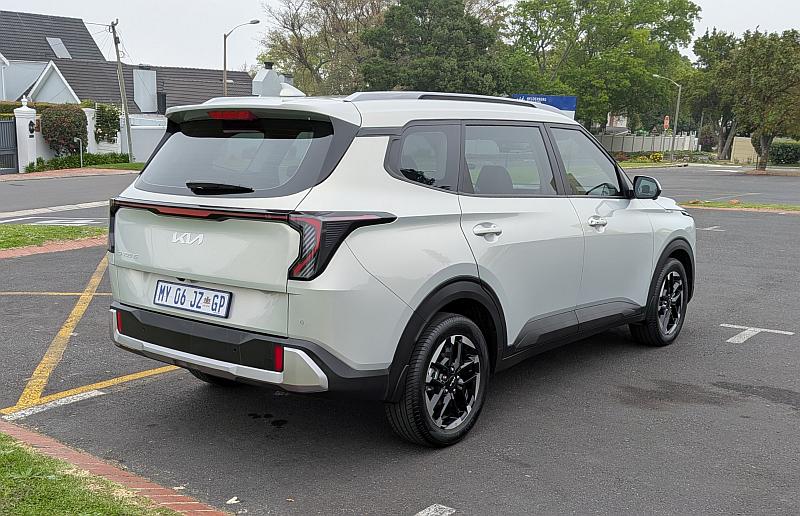
As MPVs (multi-purpose vehicles or people movers) seem to be unpopular these days, the Korean brand did well to hide the three-row seating and shoebox shape under a flowing metal garment with modern design touches. From almost every angle, the Carens looks like the stretched crossover its maker was surely aiming for.
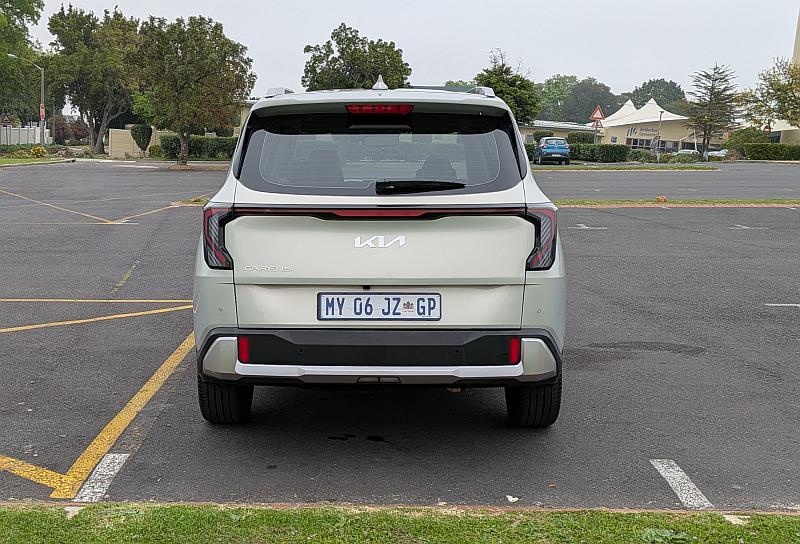
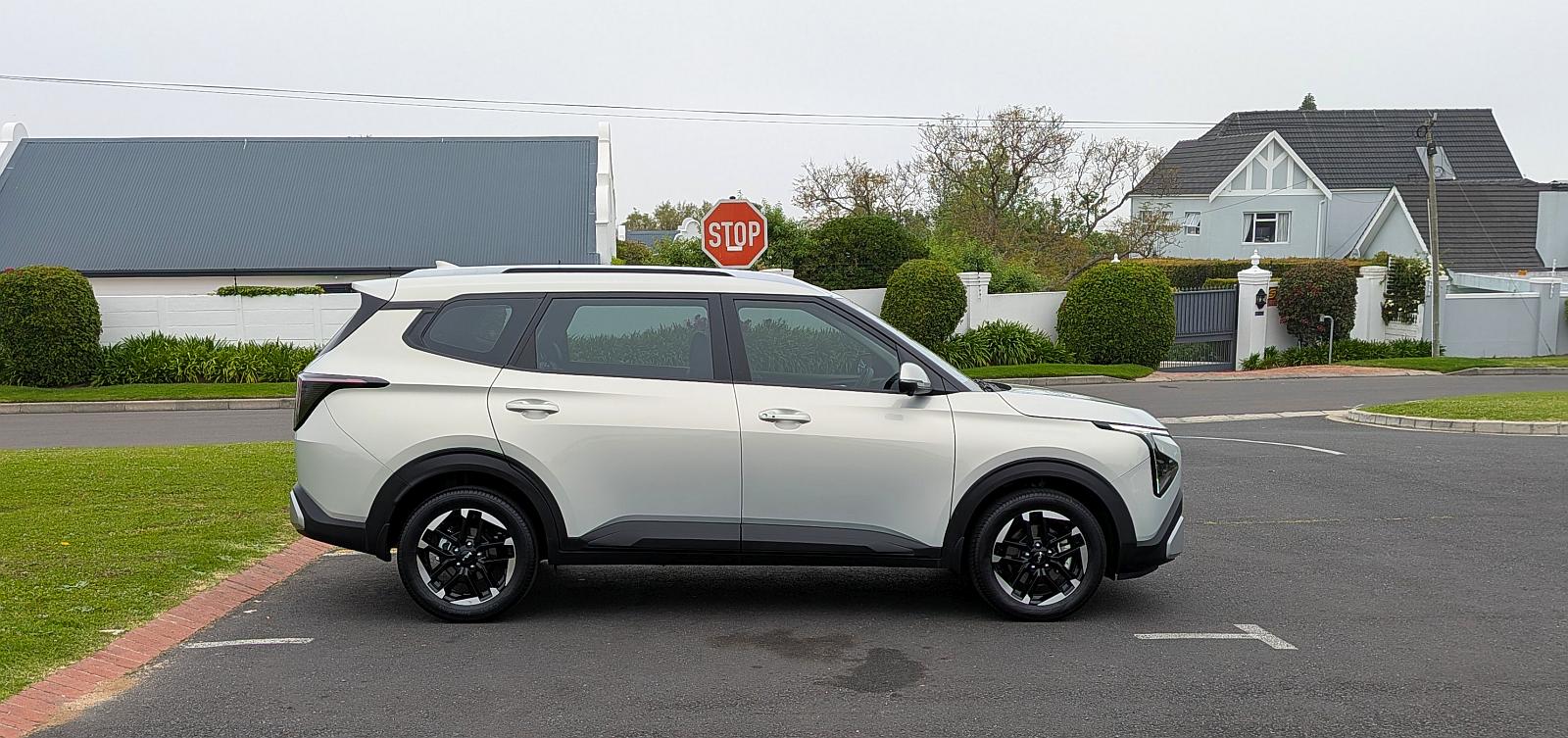
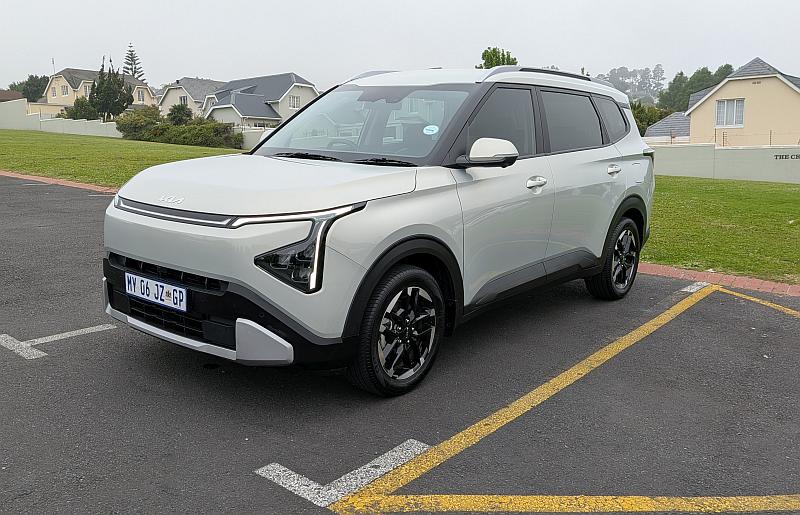
All current design elements are present, from light bars and angular clusters on either end, plastic wheel arch trims and trapezoidal lower door trim, equally triangular bumper styling, a midway disappearing shoulder line, plus a shrinking window line with blacked-out pillars and a black accent piece on the far rear one for that floating roof effect.
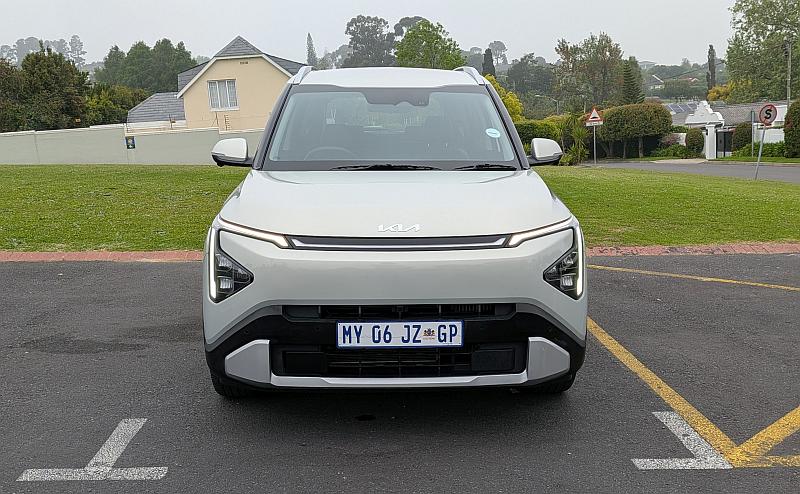
If you squint hard enough at this beige-metallic vehicle, that last bit could be interpreted as the stepped blonde bob-cut so favoured by every Karen. Their uniform also tends to include bold footwear and excessive jewellery, which could very well be mistaken for the wheels on this 4.55m-long vehicle.
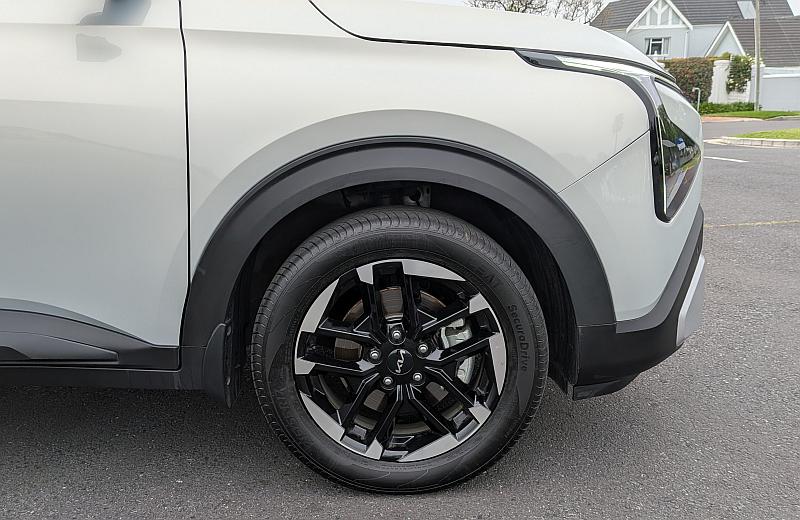
I won’t even bother describing the 17-inch alloys on this top-spec SX model, as the designers somehow incorporated every shape known to man and trimmed some of the jet-black metal with a machined edge. For the record, this press vehicle wore Indian-made CEAT SecuraDrive 215/55R17 tyres.
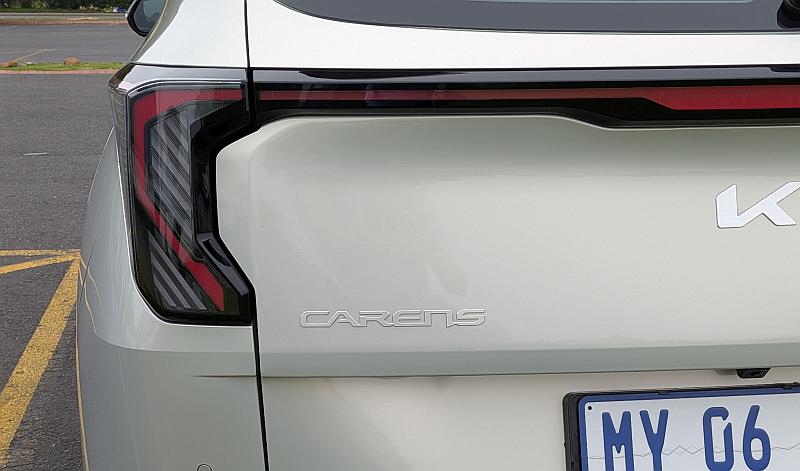
Our dearly missed company co-founder, Dr. Hans Heese, would have pointed out a few secrets hiding in that tyre description. For starters, he correctly identified that a “normal” passenger vehicle will almost always be fitted with tyres from its country of origin, so we can safely deduct that this 1,488kg crossover was constructed in India.
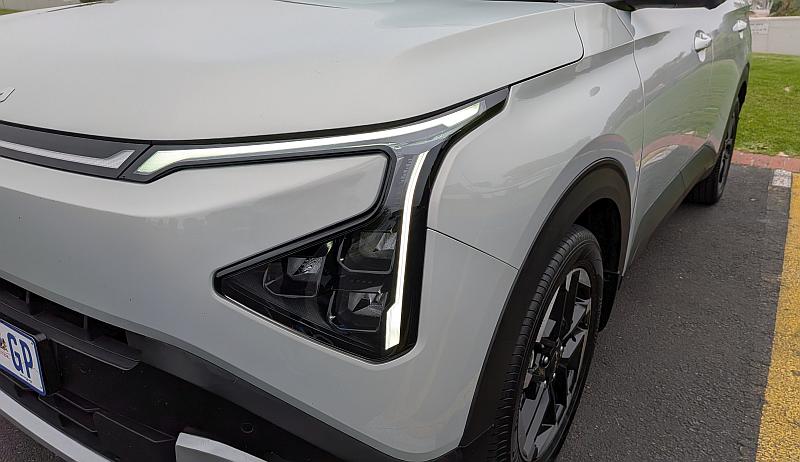
Next he would have delighted in the 55-section side wall, which, on a 17-inch rim, gives you a decent amount of rubber between the vehicle hardware and road surface. This aids overall ride comfort, but also gives the front-wheel drive-only Carens an extra degree of capability in sandy or muddy conditions.
Another local plus is the minimum ground clearance of 180mm.
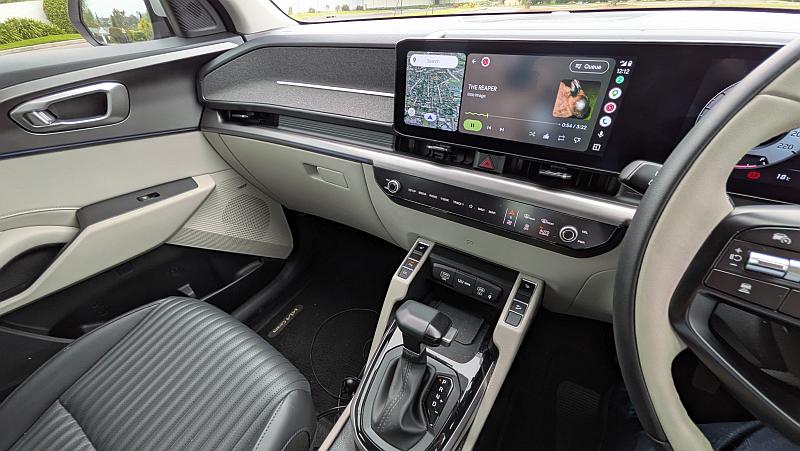
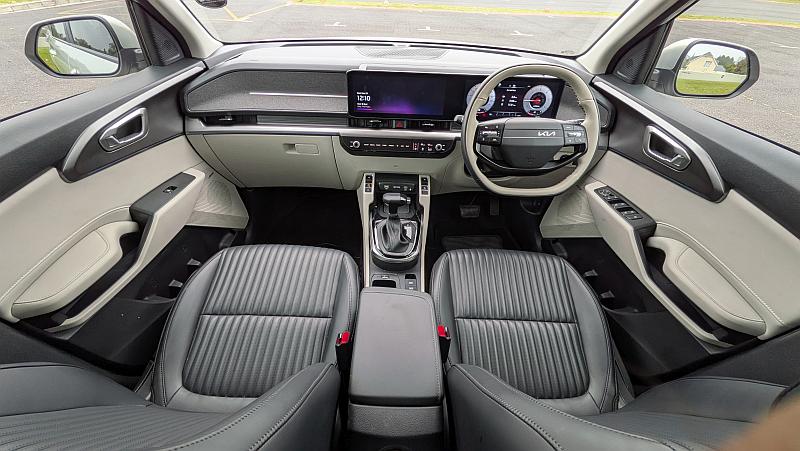
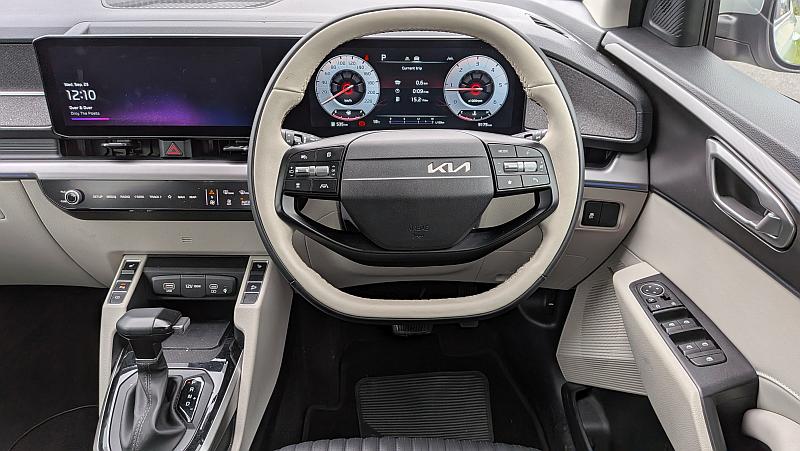
If any Karen fans were expecting leopard-print seats and billows of sweet perfume inside this Kia, I have to sorely disappoint you. A modern pale beige is contrasted by sensible black, accented by silver or piano black trim, contrast stitching and a grey fabric dashboard material which frames the obligatory double monitor.
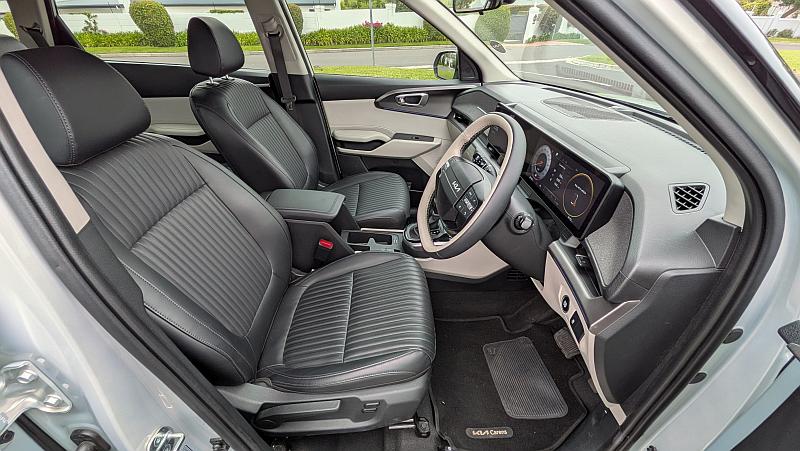
The Carens also earned serious brownie points from all our crew members because its very modern interior still relies on a traditional gear lever, quite a few physical buttons (like seat heaters or parking aids) and Kia’s fairly intuitive dual-screen audio and climate controls. We also found plenty of charging ports and a wireless charging tray.
Both Apple and Android handsets connected wirelessly with their full smartphone capabilities, while the Bose-branded sound system provided an above-average sound reproduction for this class and price of vehicle. Among many other active and passive driving aids, this SX derivative is also equipped with six airbags.
For a full run-down of the specifications, or the difference to lesser models, I strongly suggest you visit your nearest Kia dealership. The range currently starts at R360,000 with a manual 1.5 petrol version, followed by four 1.5L turbo-diesel models in one manual and three automatics, with prices going from 400k over 460k and 500k to this top-spec SX at R600,000.
Karens are quite famous for demanding to speak to your manager, but I cannot think of a single instance where this vehicle had me enraged; or even mildly annoyed. Its 85kW engine might not be the fastest, but that’s not the nature of this vehicle anyway. It’s supposed to be a smooth people carrier and that it most certainly is.
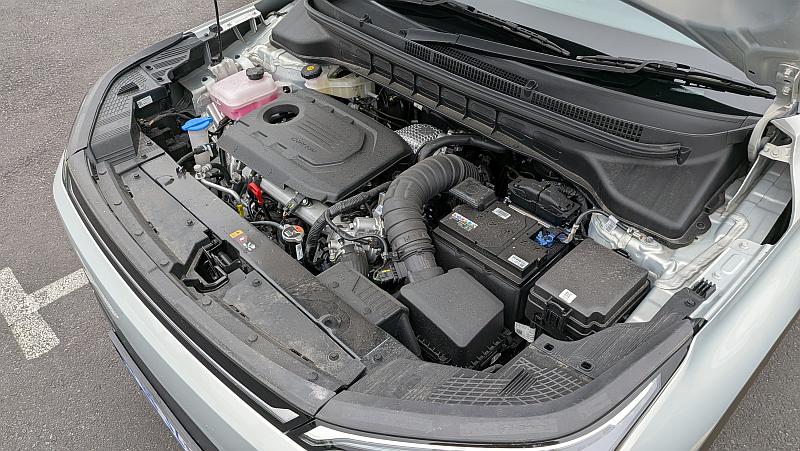
Maximum torque of 250Nm appears from 1,500 to 2,750rpm, and the six-speed automatic gearbox is nicely spaced to stay within that band. Give it the spurs and the little motor become a tad noisy around the 4,000rpm mark, while delivering an unexceptional (claimed) 0-100km/h time of 13.1 seconds and top whack of 170km/h.
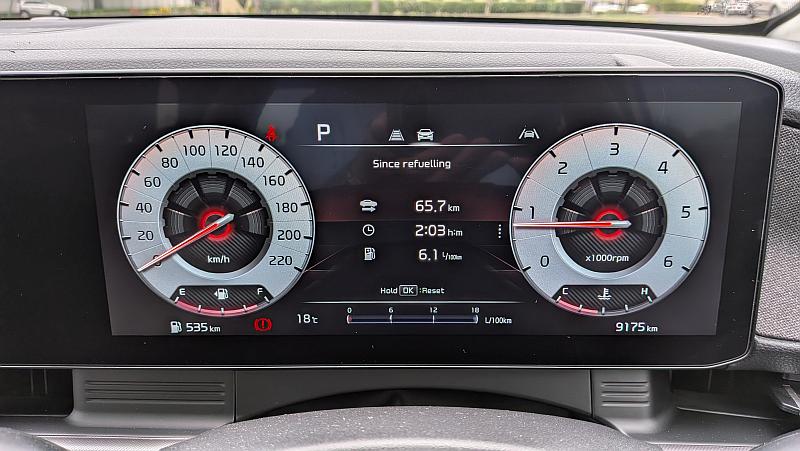
But after almost a week of village motoring and a highway commute, I couldn’t fault the Carens’ overall performance. In fact, it started shining with average inner-city consumption around the 6L/100km mark. And when we cruised on the highway just below our national limit of 120km/h, it returned a phenomenal 4.7L/100km.
Kia’s claimed average of 5.3L/100km is thereby easily achievable.
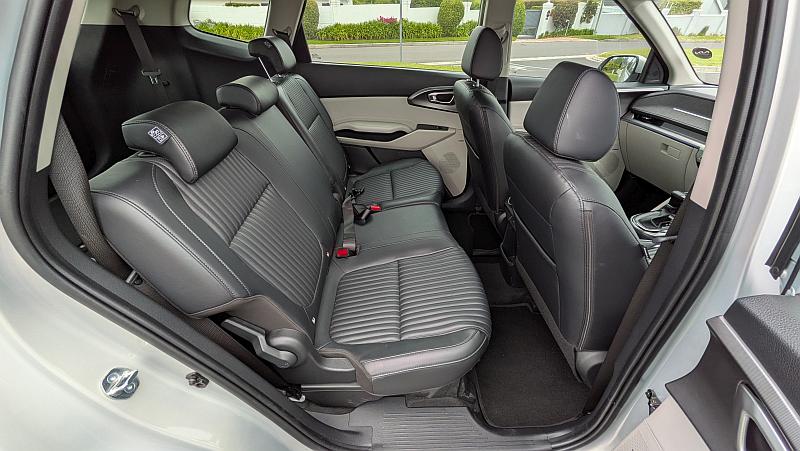
Although the fuel tank only holds 45L, that still equates to a theoretical range dangerously close to 1,000km. And need I remind you that the Carens can carry seven people in relative comfort, although I would recommend that not all of them are fully grown adults. Space in the far back row is acceptable for kids and teens.
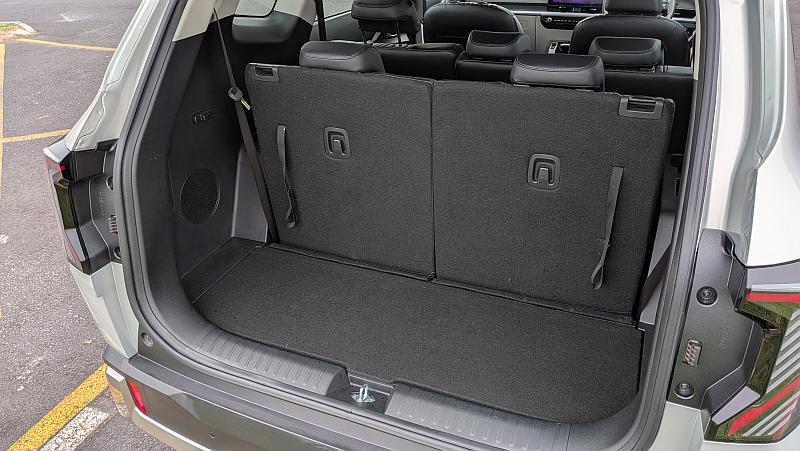
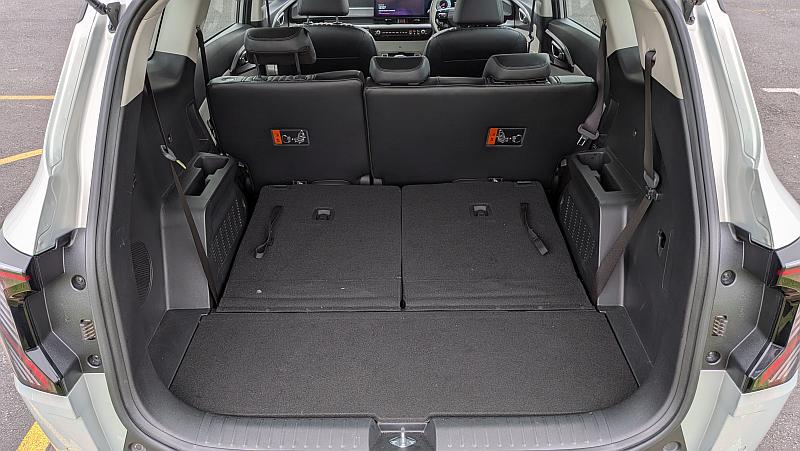
I couldn’t find exact cargo space dimensions but you should find around 200L with all seats up, at least 600L when the far rear seats are flattened, and north of 1,160L when all rear furniture is not in use. Each row gets at least two cup or bottle holders, overhead lighting, plus a pair of USB-C ports for charging those depleted smartphones.
Any more questions? As its namesake would yell, I think you best speak to the (sales or finance) manager at your nearest Kia dealership, where you may discover that this Carens is an absolutely refreshing mix of modern style and contemporary specifications with decent road manners and incredible fuel efficiency.