
The facelifted Hyundai Tucson quietly moved into Southern Africa in April 2025 without a big fuss, which is strange, considering that the model line-up has been updated quite a lot from its 2023 predecessor. Another important factor is that the new facelift also comes into the market with reduced prices and a more modern interior. We spent a week with the flagship N-Line diesel AWD.
Why the facelift?
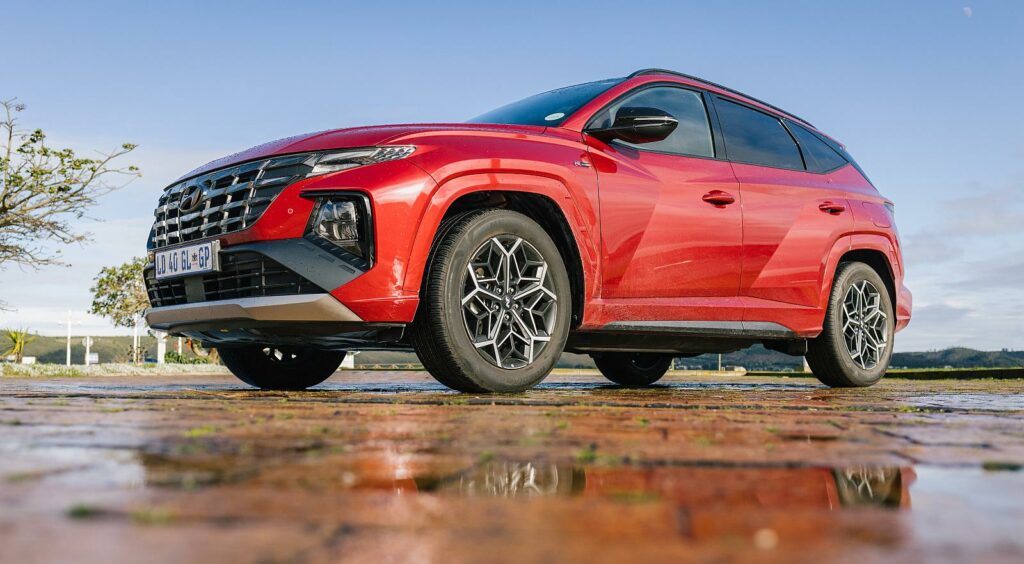
In 2023, we took the previous N-Line on an extensive road trip through the Western Cape and quite liked it. For a sporty model, the N-Line was well-balanced, soft, and delivered a stellar fuel economy. Why then would Hyundai want to update a model that works well?
The answer lies within the growing threat from the Chinese brands, who are now bringing in not only new cars but, more specifically, SUVs, almost at a weekly rate. Most of these undercut the prices of the already established brands. At the same time, these newer brands are also quite good at offering the latest interior technology; a key selling point for the majority of our market.
Hyundai therefore had to rework its prices, while also updating the interior to align with its latest competitors. Similarly, for 2025 Hyundai has opted to only sell three automatic models:
- 2.0 Premium Petrol FWD – R559,900 (R39,000 less than the previous base model)
- 2.0D Executive Diesel FWD – R709,900
- 2.0D N-Line Diesel AWD – R859,900
*Each model is sold with a five-year / 75 000km service plan.
While the pricing gaps between these three models are quite extraordinary, the Tucson still offers two diesel options, as well as AWD for less than the R900K mark; while the optional extras are a lot less complicated.
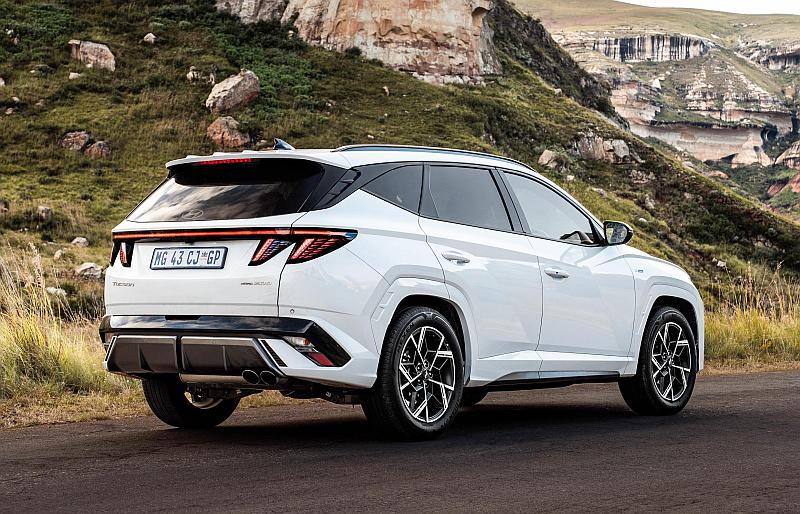
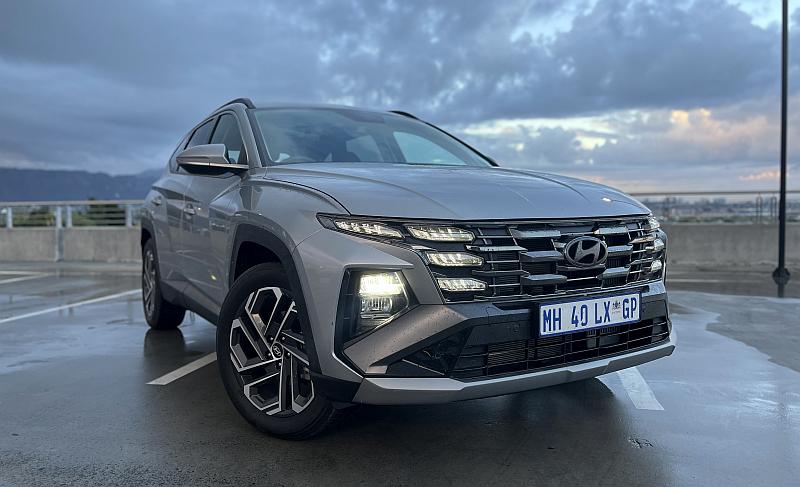
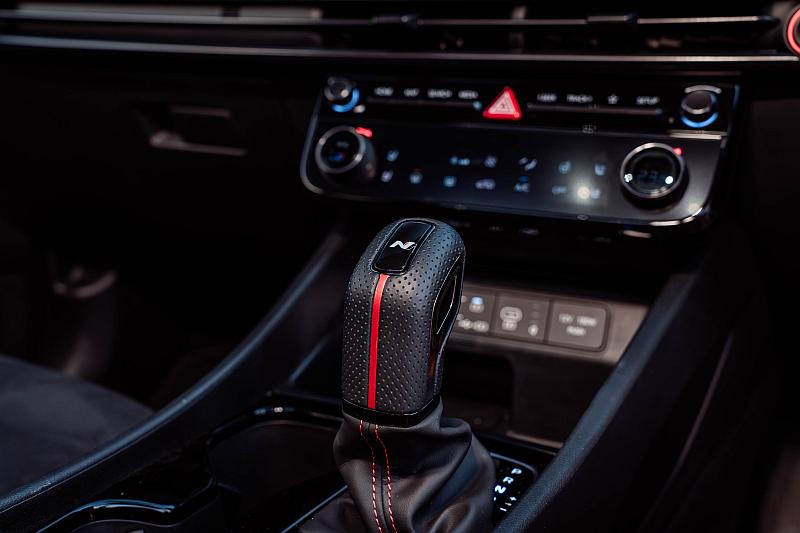
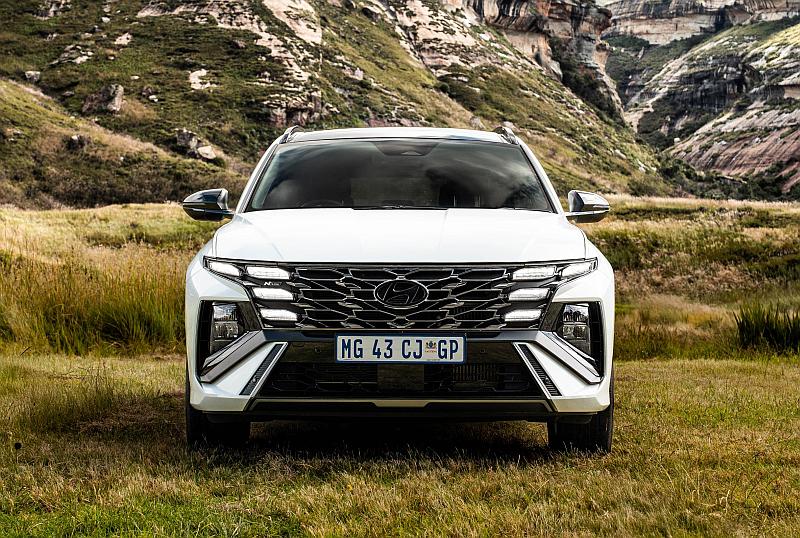
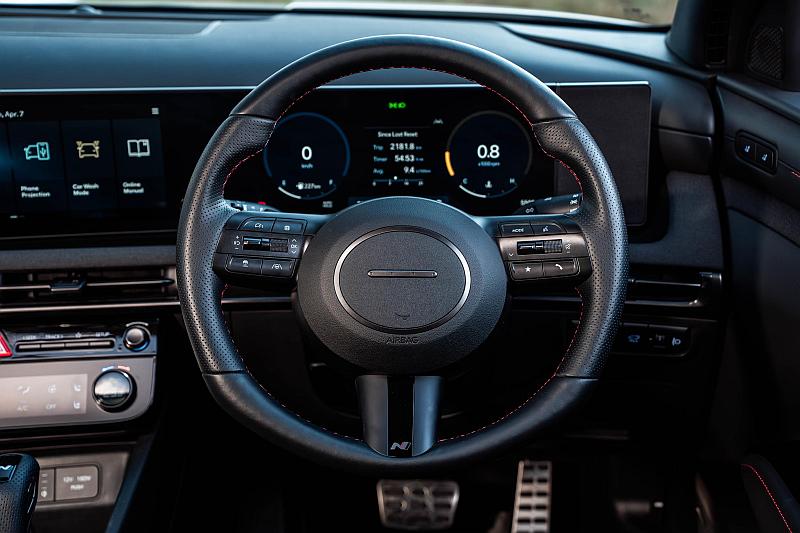
Not much has changed around the exterior, apart from a smoother front grille, new LED light signatures and a somewhat cleaner rear end with a new rear bumper and a wider skid plate. The real change to the facelift is in the interior, where Hyundai added curved 12.3-inch screens for the infotainment and instrument cluster.
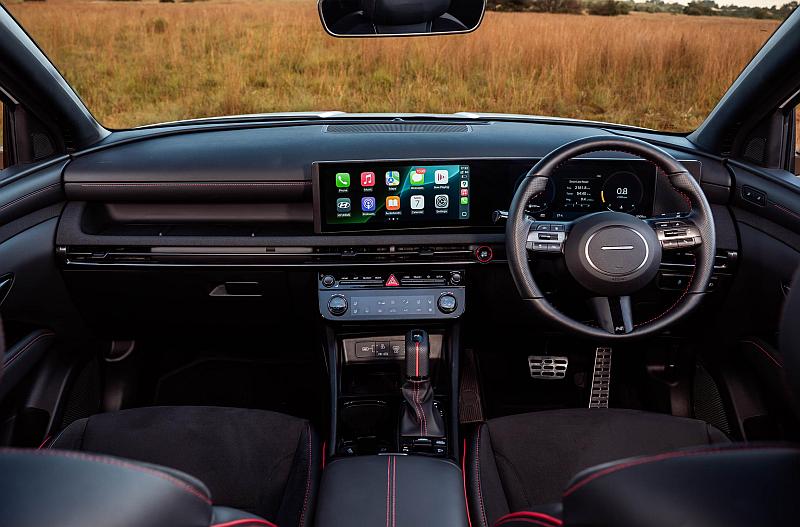
…a big win for practicality and road safety.
Another feature that we really like, and seems to become trendy again, is the reintroduction of physical buttons for simple tasks, such as adjusting the air-conditioning. This is a big win for practicality and road safety.
Similarly, as the Tucson and its iX35 predecessor always have, it offers ample leg- and head-room in both seating rows, with a relatively large 539 litres of bootspace offered behind the second seating row.
Talking about the second row, it also now gets its own ventilation and two USB Type-C ports.
Engine options
The new Tucson range only offers two engines, namely the petrol in the base model, as well as this diesel engine in the Executive and N-Line model. The Premium (petrol) model is not turbo-charged and is therefore somewhat slower and heavier on fuel, compared to its diesel siblings:
| 2.0 Premium AT | R2.0 Diesel Executive AT | R2.0 Diesel N-Line AT |
| AWD/FWD | ||
| FWD | FWD | AWD |
| Gearbox | ||
| 6-Speed Automatic | 6-Speed Automatic | 8-Speed Automatic |
| Power and Torque | ||
| 115kW and 192 Nm | 137kW and 416 Nm | 137 kW and 416 Nm |
| Fuel Consumption | ||
| 8.9L / 100km | 7.4L / 100km | 7.4L / 100km |
| 0-100km/h | ||
| 11.4 seconds | 9.8 seconds | 9.8 seconds |
The Tucson might not be the quickest in a straight line, especially when it comes to the petrol version, nor is the base model equipped to tow. Should fuel efficiency and power delivery be your desires, we would rather steer towards the diesel models, delivering a reputable fuel consumption, while also delivering reasonable torque.
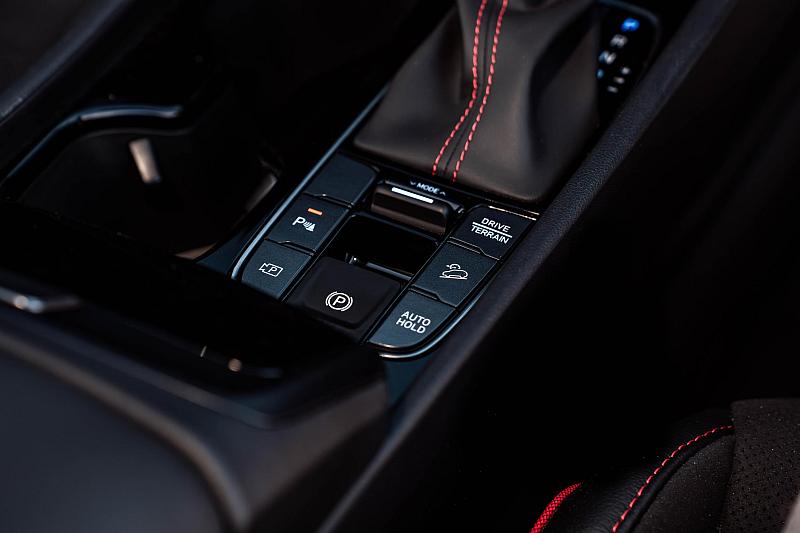
The biggest win for the Tucson, compared to its Chinese rivals, is the automatic gearbox. We found the 8-speed automatic gearbox to be very efficient and smooth, especially when it is compared to the jerky DCT gearboxes found in most of the new SUVs.
The Hyundai Tucson N-Line
Which brings us to one of the two models we recently tested, the other being the Executive Diesel AT.
Usually, the “line” suffix for most manufacturers refers to their bridging model between the standard and sporty models. Mostly, these “line” models consist of the standard car, using the standard engine and gearbox combination, but with the addition of a sportier body kit.

This is not the case with the Tucson N-Line. While the 2.0D Executive FWD and 2.0D N-Line models carry the same diesel engine, the latter comes with an eight-speed gearbox, firmer suspension, 19-inch wheels, body-coloured arches, a somewhat sportier body design, and AWD to give the car a bit more efficiency and traction. The body colours of the N-Line are also quite striking with six options (Phantom Black, Titan Grey, White Cream, Shimmering Silver, Ocean Indigo Blue, and Ultimate Red) to choose from.
This does not change any of its 0-100km/h performance, but does give the N-Line a bit more confidence and less body roll.
Inside, the N-Line is also well-specced with red-stitched suede / leather seats, a Bose sound system, head-up display and ambient lighting.
Hyundai therefore did well to make the N-Line not just a standard Tucson with a sporty bodykit.
Is the Tucson still relevant when the Chinese are undercutting everyone?
Yes, it’s true; the Chinese are causing quite an upset in the market, especially when it comes to SUVs and Crossovers. Yet, the Tucson and its iX35 predecessor have always been among the most successful options in this market segment, and with many good reasons.
The base Premium model is now in line (or cheaper) than its Chinese counterparts, while the N-Line not only looks better, but also performs much more stable than its Chinese counterparts in the “Sporty” SUV segment. The biggest win for us, however, is the fact that Hyundai aced it in terms of the gearbox, which not only allows for a more pleasant drive, but also a much better fuel efficiency.
However, with a price difference of R150,000 between the Executive and N-Line model, we would choose the former as the best value for money. It remains one of the selected few diesel SUVs in this segment, while also providing ample interior space, comfort, and generally good power delivery.