

The King of Practicality
With all the technologies one could think of, remarkable warranty offerings, as well as unbeatable prices, Chinese car makers are causing a negative ripple effect for others. Take our recent test unit, the new Honda Fit Hybrid, as a prime example. Logically, the Honda Fit (Hybrid) is the perfect car to own, yet it has one reason for its potential downfall in our local market.
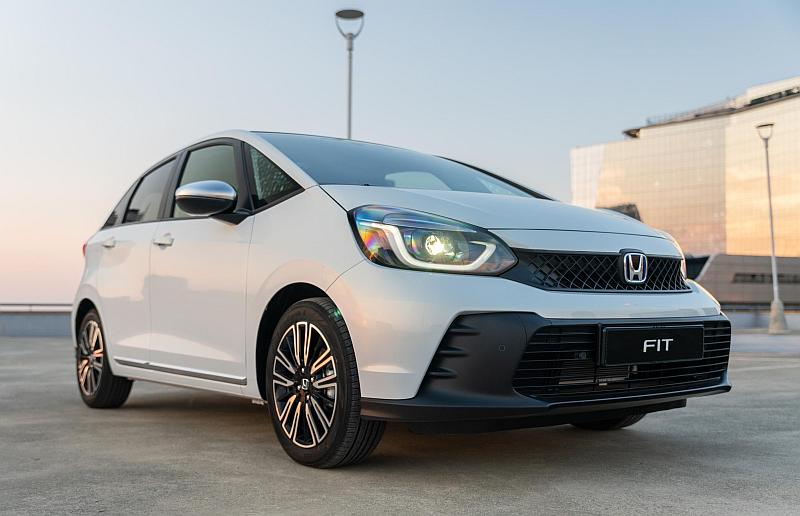
Take a trip through Lesotho, and the amount of Honda Jazz’s (recently renamed as the Fit in our local market) vastly outnumbers any other vehicle. It makes absolute sense as this small Japanese hatchback ticks all the boxes. It’s spacious, fuel-efficient (even in the non-hybrid guise), and has a high enough ground clearance to travel most gravel roads (a point we recently proved whilst traversing the Zuurberg Pass).
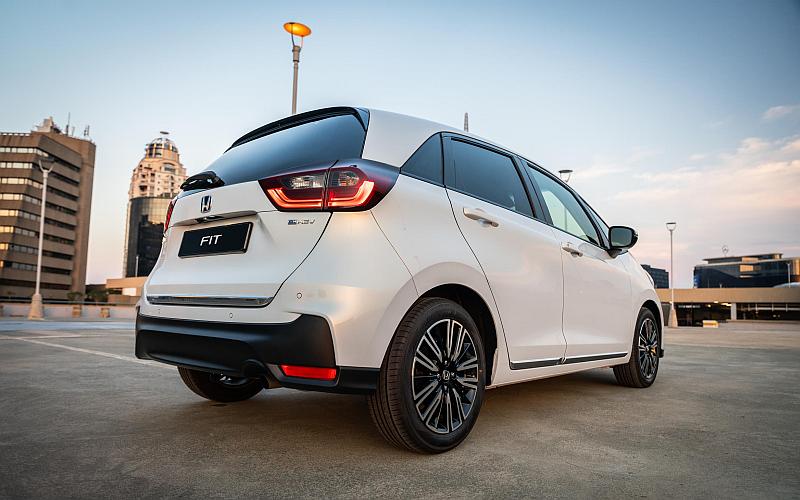
Sure, it might not be the quickest car out there, but that’s not the point. And whilst a screamy CVT gearbox might usually be associated with this kind of eager driving, the eCVT in this new Fit Hybrid seems to better adjust under acceleration.
Two key standout points
With the scheduling of the new Fit, we set out to test two main features, namely its practicality, as well as its overall fuel consumption; considering that Honda added a bit more power to the new 1.5L Hybrid engine. During our 2021 test with the previous Fit Hybrid, we averaged 5.3L / 100km over a distance of 2200km. This time around, we only covered 200km, yet did so in the stormy and windy conditions of a usual Cape Town winter.
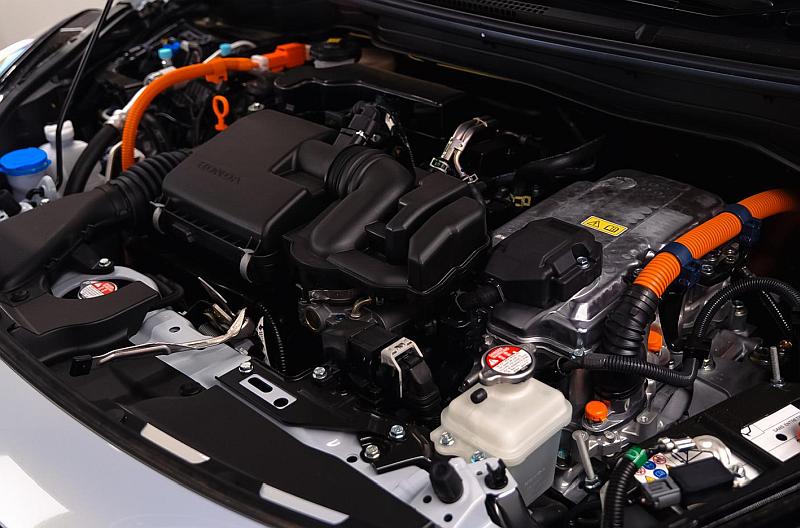
The new 1.5L Hybrid engine, now delivering 90kW and 253Nm, averaged just 4.9/100km, which is astonishing considering the conditions, as well as the more powerful engine.
Honda also claims that this added power delivers an improved 0-100km/h time of 9.4 seconds. Although that level of performance seems fairly impressive, practicality was of higher importance to us.

Perfect timing, as one of our journalists was bound to take delivery of a workbench, and took the opportunity to skip the added courier fees. Much to the disbelief of the sales staff, the 1200 x 600 x 900mm table perfectly fitted (pardon the pun) into the rear. While the rear seats had to be folded down, the lowered boot lid helped to easily load (and unload) the table in the pouring rain.

The non-hybrid units (Comfort CVT and Elegance CVT) are even more practical as they can fit 309L behind the rear seats and 1210L when the rear seats are folded down. In comparison, the Fit Hybrid makes do with 11L less.
One of the best mild hybrid systems
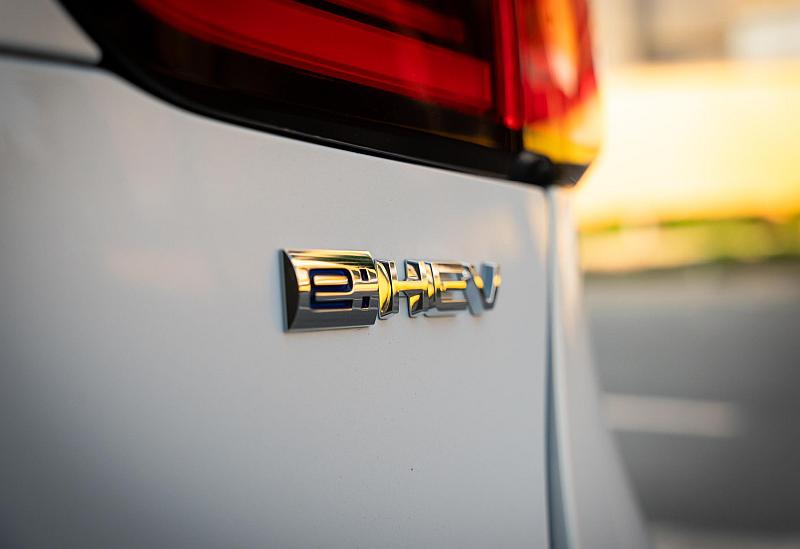
We said this before, and we’ll say it again: the mild hybrid unit in the Honda Fit is one of the best in the segment. The Fit mainly delivers its low fuel economy due to the fact that the hybrid battery and the petrol engine are in a constant relay with one another.
On the open road and at higher speeds, the petrol engine automatically charges the battery; also through regenerative braking. This is especially efficient when the eCVT is switched to its “B” position, which strengthens the effect of regenerative braking. Once in the city, or at slow driving speeds (below 40kph), the petrol engine will switch off, relying on the electric motor to keep everything moving.
Compared to many of its Chinese rivals, the Fit does so with minimal effort. That being said, the switch back to the petrol unit can occasionally be somewhat loud as the engine tries to reload the battery.

Honda also boasts about the fact that its 40L tank can theoretically achieve a 1000km range. However, we do think this would be more achievable in town, as highway driving will require faster speeds and a reliance on the petrol unit.
Not holding back on tech
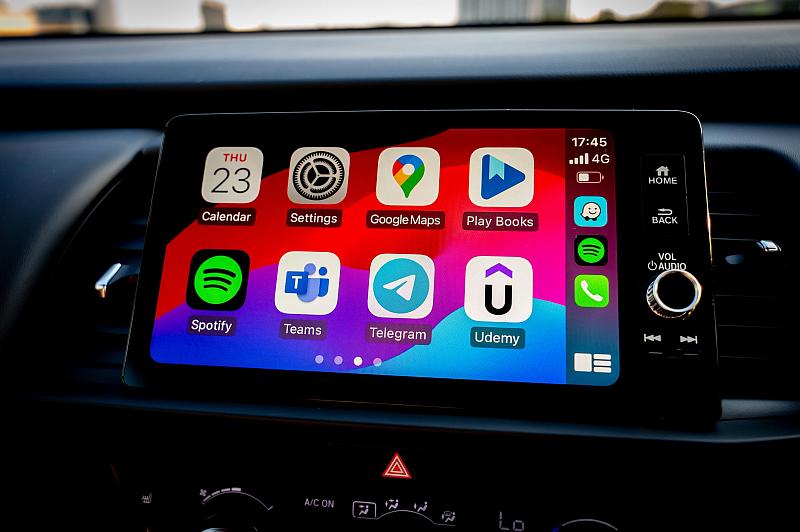
Although Honda’s interior technology update has now been with us for quite a while, it is still relevant. We like its minimalist layout, complete with a 9-inch infotainment system, wireless phone charging, Bluetooth, two USB-A ports in the front, as well as two USB-C points in the rear, climate control, heated front seats, and the obvious mobile phone connections such as Apple CarPlay and Android Auto.
Safety
The Fit also does not skimp on safety features, as it also comes standard with ABS and EBD, adaptive cruise control, lane keeping assist, a reverse camera, parking sensors, autonomous braking and six airbags.
Moving the Fit around in small spaces is also quite easy, thanks to its enlarged side mirrors and wide windscreen. This might feel strange when initially climbing into the Fit, yet makes it incredibly easy to see out of when changing lanes, or reversing in a parking lot.
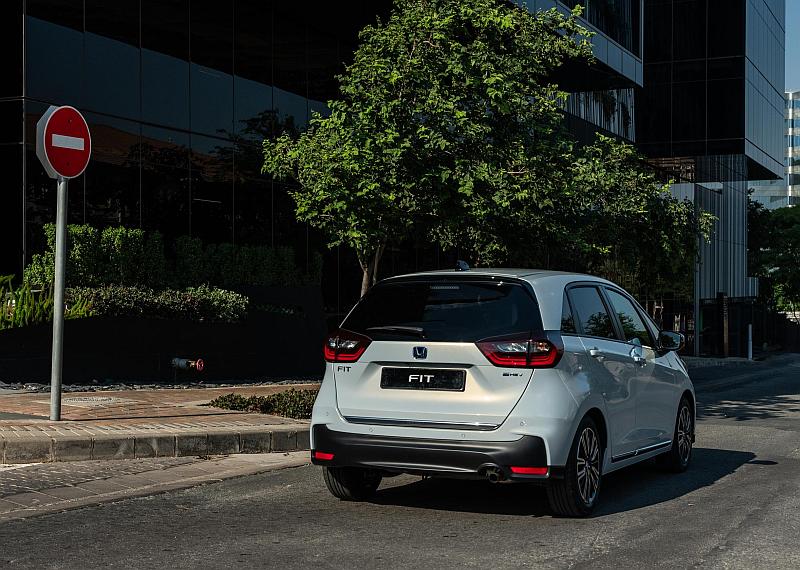
To be frank, the old Jazz used to be incorrectly stereotyped as a vehicle for the elderly, mainly due to its visibility and safety features. As elsewhere known, Honda South Africa decided to re-brand the Jazz to the ‘Fit’ in an attempt to draw in a younger market.
This re-branding did not just include a name change, but also an all-round modernistic change to make the Fit more appealing. It is a car that’s missed by so much of the market, thanks to a flood of cheaper alternatives.
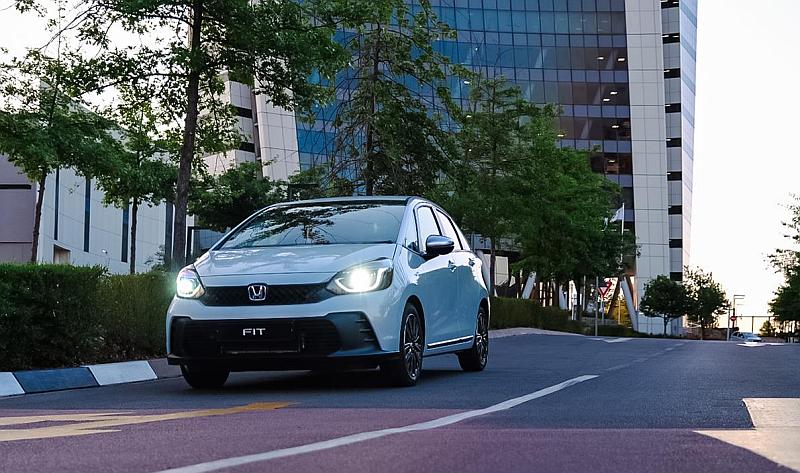
Whilst the price of the Honda Fit range is quite eye-watering, especially for the Hybrid unit, we have to state that it feels much more refined, while the build quality is also superior to many of its cheaper rivals.
Should Honda South Africa potentially be able to do something about its pricing, the Honda Fit would be at the top of our list.

Pricing and Warranty
As of August 2025, the Honda Fit range starts at R380 000, while the range-topping Hybrid e-CVT closes the range at R544 900. However, it does come with a competitive 5-year / 200 000km warranty, 8-year / 200 000km battery warranty, as well as a 4-year / 60 000km service plan.