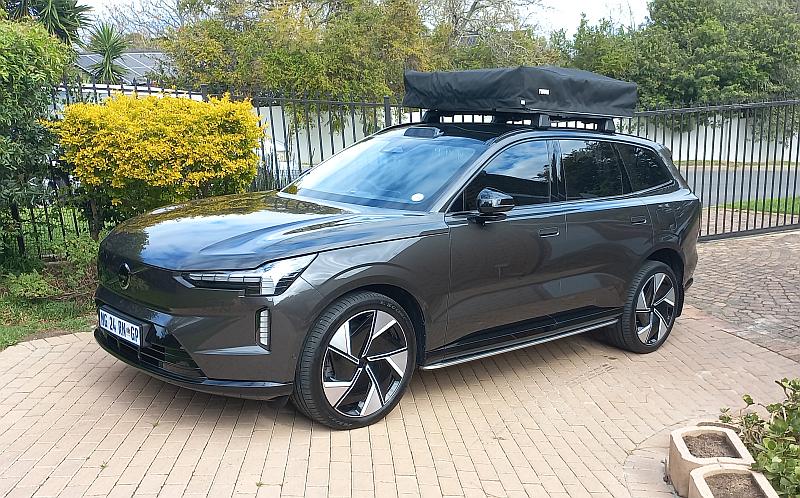
In 2024 we tested the new Volvo EX30, a car we thoroughly liked. Similarly, it extended the agonising search for a “problematic” car from this brand. During my own journalistic career, spanning almost a decade, I am yet to find the ‘ugly duckling’ in the Volvo range, a vision shared with several other motoring journalists. Volvo’s Swedish engineering and design has always made it very difficult to find any faults.
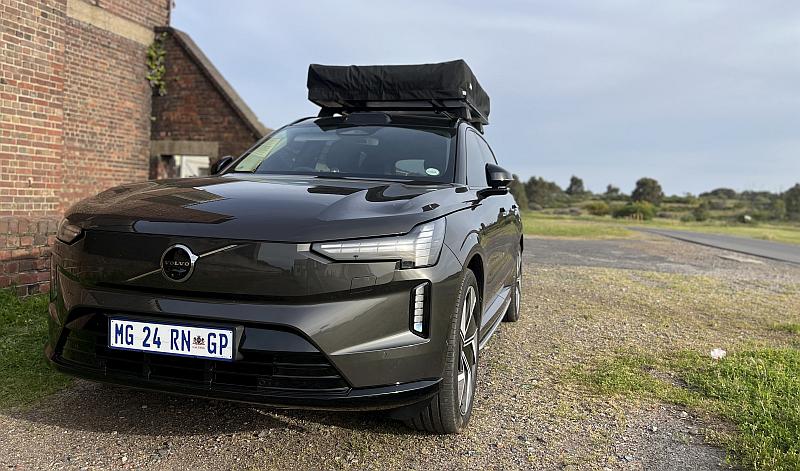
Yet, as the brand is transitioning to electric mobility, and with several models lined up for 2026, one might wonder if the new EX90 lives up to its eye-watering price tag.
A price tag matching its quality
At its Southern-African launch in April this year, a distinct murmuring among the media followed as soon as the R2 650 000 price was announced, especially considering that the EX30 starts at less than R1 000 000.
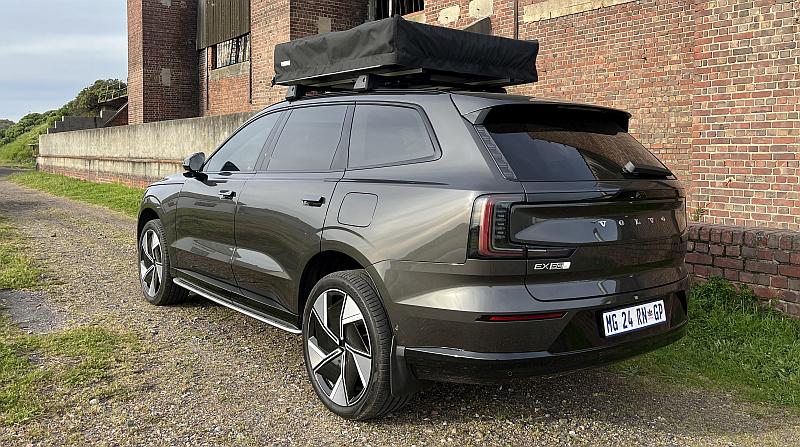
But it’s important to note this isn’t simply an EV version of the existing XC90 SUV—it’s a genuinely new flagship for Volvo. It is the safest Volvo ever produced, and a highly luxurious seven-seater SUV, claimed to reach around 600 km on a single charge. Compare it to its main German rivals in this relatively select market and the price starts to make more sense. Volvo knows fully well that the EX90 will not be seen around every street corner; instead, it is focused on delivering quality, safety and efficiency.
Apart from a standard three-year / 60 000 km maintenance plan, five-year / 100 000 km warranty, five-year roadside assistance, and eight-year battery warranty, Volvo includes a two-year public-charging package (valued at R12 000), a free GridCars wallbox (valued at R7 500) installation at home, and three years of Vodacom data (10 GB per month).
Power, performance and real-world range
Let’s get into some of the hard figures. The EX90 in South Africa comes in only one model, namely the Ultra Twin Performance Specification, with 380 kW of power and about 910 Nm of torque. Those aren’t small numbers. It completes 0–100 km/h in about 4.9 seconds (although our test unit with the Thule rooftop tent was about 0.2 seconds slower), which is quite impressive for a vehicle approaching three tons. Top speed is limited to 180 km/h.
Those aren’t small numbers.
The battery size stands at 111 kWh (107 kWh usable), with Volvo claiming a total range of 600km. In real-world local tests the story is slightly different… but still good. While 600km might certainly be possible within our cities, the range of any EV will always deplete faster on the open road, an unfortunate reality of South African roads. On a full charge we achieved about 490km with a combined consumption in and out of the city.
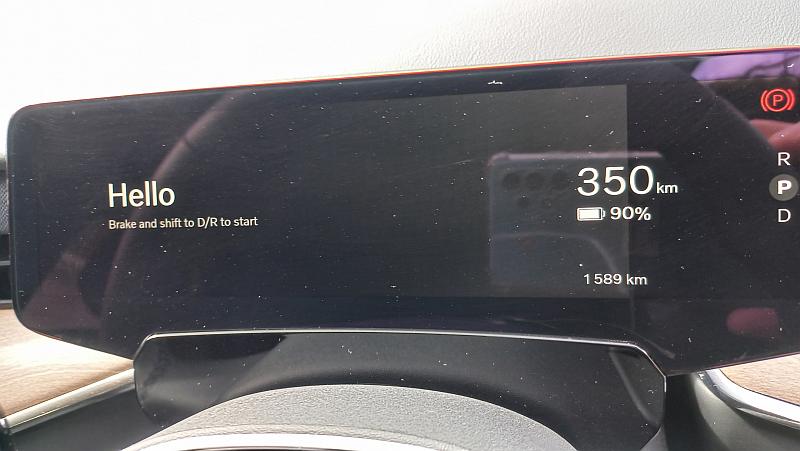
The EX90 also has an excellent 1-pedal operation, where settings allow for the car to brake on its own, with the driver barely needing to touch the brake pedal itself.
We also mainly charged the EX90 using the 150kW Rubicon chargers in Somerset West, which charged the EX90 from 10-80% in about 55 minutes. When making use of a smaller 60kW DC public charger, this will take around 1 hour and 45 minutes.
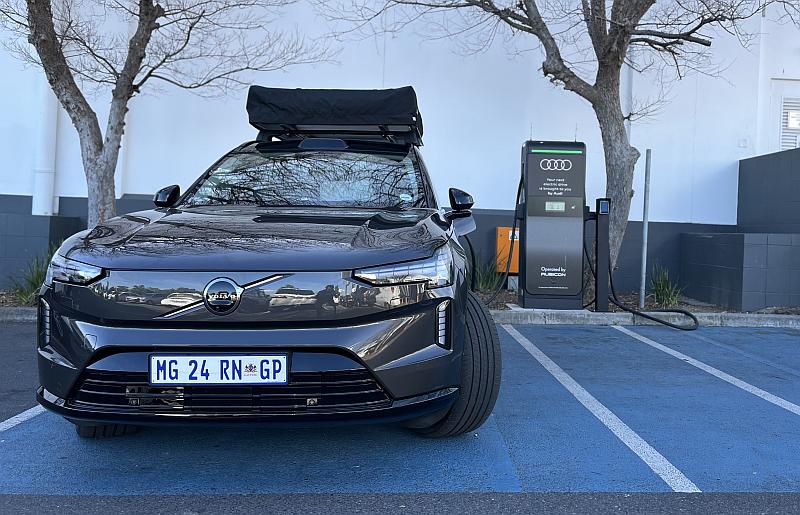
With the EX90 also carrying a larger battery, charging it home will take much longer. Luckily, an 11kW wallbox should be enough to charge the car to 80% in eight hours, enough for a good night’s sleep.
The EX90 can even power a household through its Vehicle to Load (V2L) functionality.
Space, practicality and the interior
As you’d expect from a flagship SUV, the interior space is generous. The third row is usable (especially for children or shorter adults), the second row is roomy, and the front seats are comfortable for long stints.
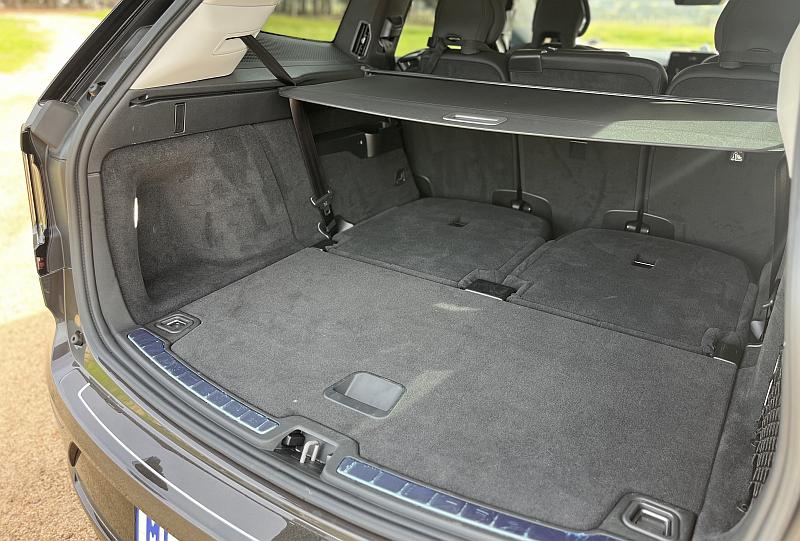
Behind the third row there’s around 384 litres of cargo capacity; folding the third row brings you to about 655 litres, and if you fold all the rear seats you reach around 1915 litres. An additional 65 litres are also available under the boot floor.
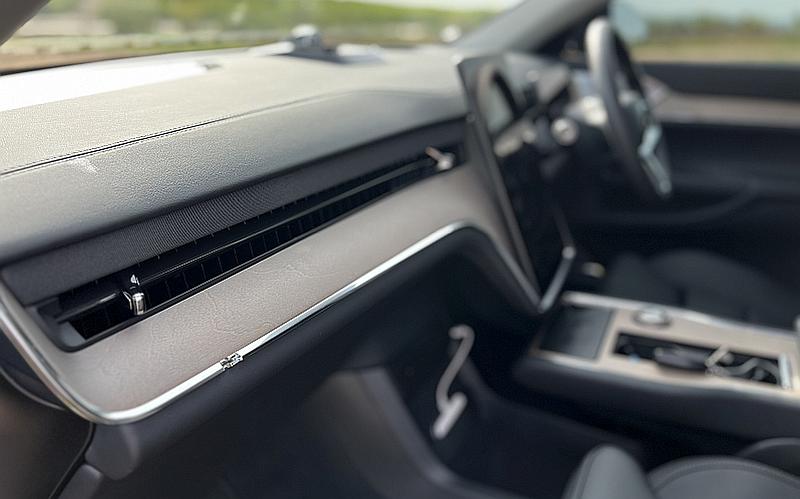
Inside, the cabin is modern yet minimal, with a combination of sustainable and recycled materials. The front seats even come equipped with a heating and massage functionality.
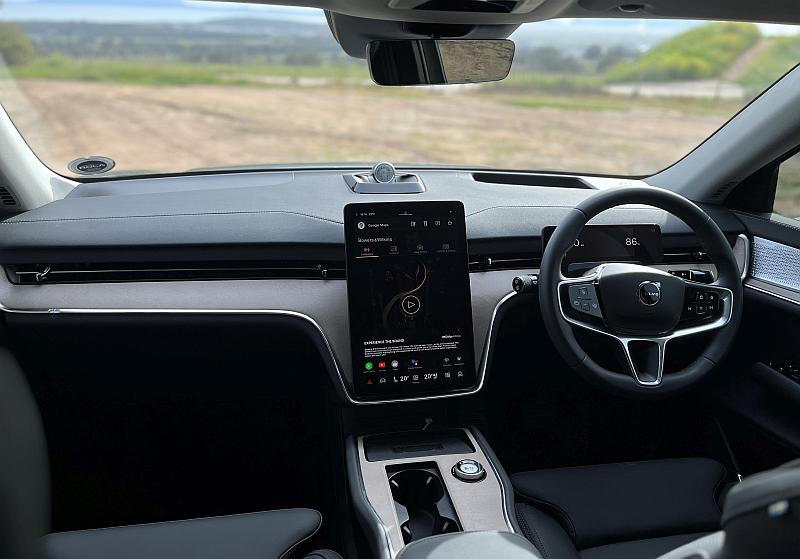
The infotainment screen layout (a portrait-orientated 14.5” touchscreen / 9” for the driver display) is clean, the materials feel premium, and the practicalities (USB ports, wireless charging, good connectivity) are all there. The cabin also features an excellent Bowers & Wilkins sound system with a total of 25 speakers. On the tech and safety front, Volvo’s added LiDAR, radar and camera systems to monitor the surroundings — the EV equivalent of a rear-view mirror you want to look through.
What about safety?
Volvo states this to be the safest Volvo to date with a host of standard features, such as a 360-degree camera, lane keeping assist, blind-spot monitoring, cross-traffic alert, and road sign information.
Driving dynamics and what it means to live with
The EX90 barely feels like a three-ton car, thanks to its light and direct steering, while the air suspension does a good job of letting the car feel firm yet floaty, even on its massive 22-inch low profile tires. For a seven-seater of this size, the EX90 does very well, not just on the open road, but also within town. It’s easy to maneuver and feels equally at ease on gravel roads.
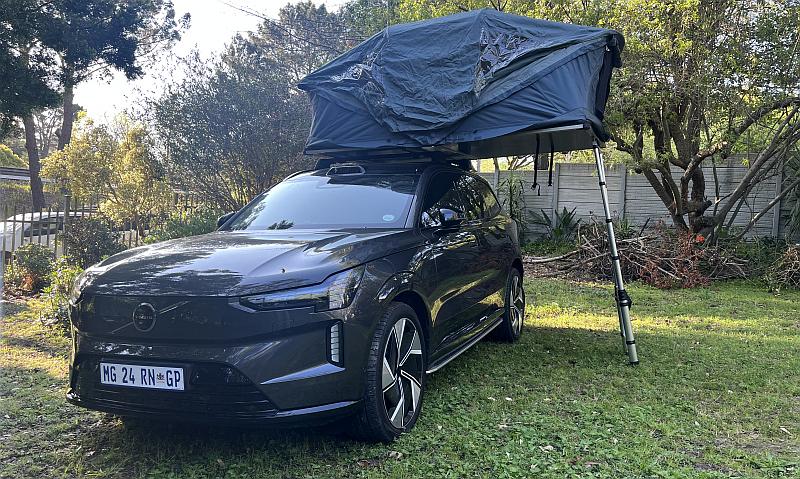
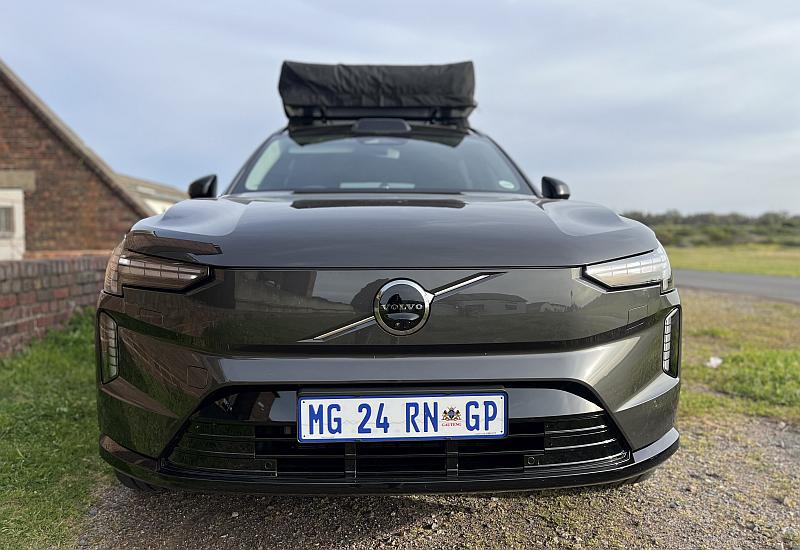
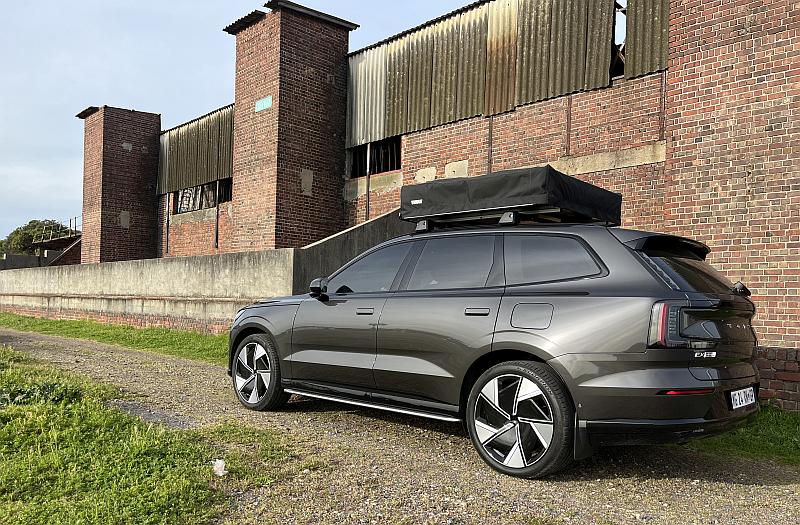
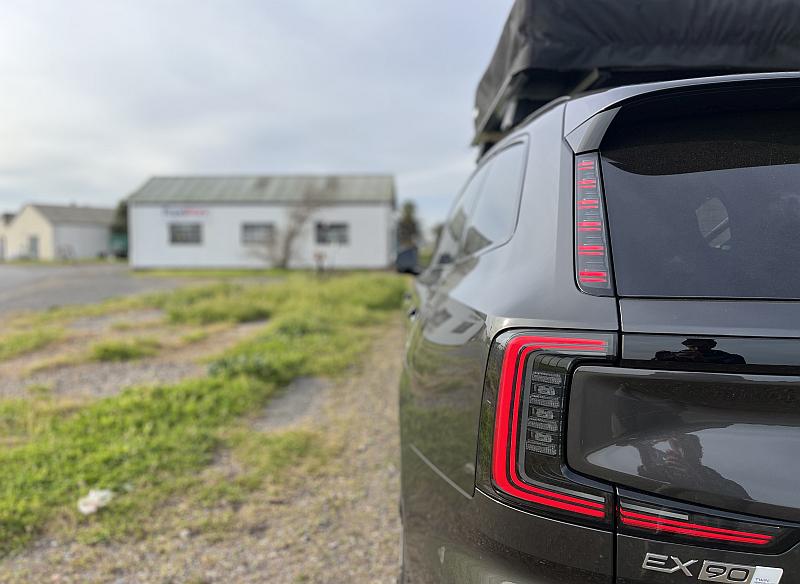
We would happily take this car on camping trips, and should have probably done this, considering that our test unit was sent with a Thule Approach Rooftop tent.
The EX90 drive is smooth and comforting yet, thanks to a sporty suspension setting, can pass traffic at quite a rapid speed.
So, does it match the price?
For the buyer who can stretch to R2.65 million, the EX90 is probably one of the best-balanced large electric SUVs on the South African market right now. You get strong performance, usable real-world range, generous space and that unmatched Volvo safety.
Surely the EX90 will not be on the top-10 list of the most sold cars per month, yet that is not its aim. Rather, the EX90 should be seen as an exclusive seven-seater. And once again, Volvo has added another car to our favourites list.